


Why Ecommerce Brands Are Moving Beyond Ad-Driven Growth

For a long time, ecommerce growth felt straightforward. Brands invested more into paid acquisition, attracted more customers, and watched revenue rise accordingly. As long as advertising platforms delivered reach and conversions at reasonable costs, this model appeared sustainable.
Today, that simplicity has disappeared. Rising acquisition costs, volatile performance, and increasing platform dependence have exposed the fragility of ad-only growth. What once felt scalable now feels increasingly constrained.
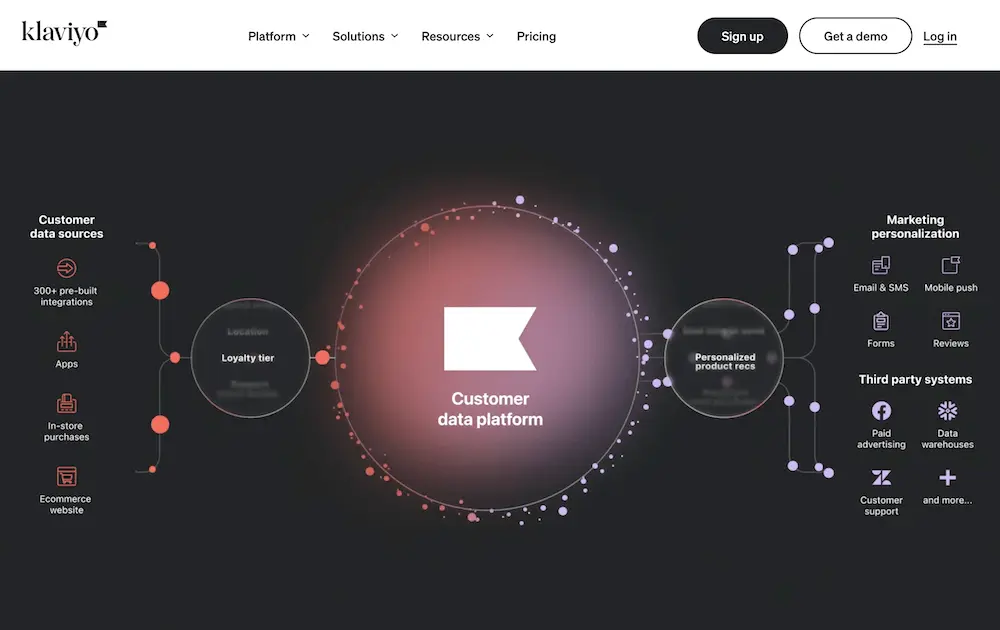
In response, many ecommerce teams are rethinking how growth is built. Instead of relying solely on rented attention, they are investing in owned marketing channels—particularly email, SMS, and unified customer data platforms like Klaviyo—to create durability, leverage, and compounding returns.
The Reality of a Mature Paid Media Landscape
Paid advertising is not failing, but it has fundamentally changed. Platforms are more competitive, algorithms are more selective, and success increasingly depends on signals brands do not fully control.
As the ecosystem matures, inefficiencies that once went unnoticed now directly impact profitability. Many ecommerce teams recognize the same patterns across channels:
- CPMs that rise year after year with no clear ceiling
- Campaign performance that fluctuates despite stable creative
- Higher spend that delivers marginal, not proportional, growth
When traffic was inexpensive, brands could afford experimentation, redundancy, and even waste. In today’s environment, those same inefficiencies immediately erode margins.
Most importantly, paid media offers no memory. Once spend stops, visibility disappears. Growth resets rather than compounds.
Why Ad-Driven Growth Hits a Structural Ceiling
Advertising excels at acquisition, but acquisition alone does not create durable growth. Ad-driven models treat each conversion as a discrete event rather than part of a long-term relationship.
This transactional framing introduces several structural limitations:
| Challenge | Impact on Growth |
|---|---|
| Rising acquisition costs | Customer lifetime value struggles to outpace CAC |
| Platform dependency | Algorithm changes disrupt performance overnight |
| Fragmented customer data | Limited understanding of post-purchase behavior |
Without a strong retention layer, even successful acquisition eventually plateaus. Brands may attract customers efficiently, but fail to convert that initial success into repeat revenue.
At scale, retention is no longer a growth lever—it becomes the foundation.
Defining Owned Marketing Beyond Tactics
Owned marketing is often reduced to channels like email newsletters or promotional SMS messages. In reality, it represents something more fundamental: control over the customer relationship.
Owned channels allow brands to communicate directly, without intermediaries dictating reach, pricing, or access. Customer data collected through these channels remains within the brand’s ecosystem rather than being fragmented across external platforms.
Email subscribers and SMS opt-ins are not just audiences. They are cumulative assets that improve with time and interaction.
- Each purchase enriches customer context
- Each interaction refines relevance
- Each message strengthens brand familiarity
Unlike paid media, these assets do not reset. They compound.

Retention as an Engine for Revenue Stability
Retention is often discussed in terms of cost efficiency, but its strategic value runs deeper. Repeat customers behave differently from first-time buyers in ways that materially affect revenue quality.
Returning customers typically convert at higher rates, require fewer incentives, and demonstrate greater trust in the brand. Over time, this creates a stabilizing effect on revenue.
Even modest improvements in repeat purchase behavior can transform unit economics. Instead of relying on constant acquisition pressure, brands benefit from predictable lifecycle-driven sales.
This is where owned marketing transitions from a supporting role into a core growth engine.
Transforming Customer Data Into Action
Most ecommerce brands collect large volumes of data. Purchase history, browsing behavior, engagement signals, and support interactions all contain valuable insight. The challenge lies in unifying and activating that information.
Data that remains siloed cannot drive retention. Actionable data requires integration, interpretation, and automation.
Platforms like Klaviyo are designed to consolidate these signals into a single customer profile, enabling brands to respond intelligently rather than reactively.
With unified data, brands can:
- Personalize communication beyond static segments
- Trigger messages based on real-time behavior
- Continuously adapt lifecycle flows as patterns change
Marketing shifts from broadcasting messages to sustaining conversations.

Email and SMS as Complementary Retention Channels
Email and SMS are frequently treated as separate tools with different objectives. In practice, their strength lies in coordination.
Email provides depth. It supports storytelling, education, and detailed value propositions. SMS provides immediacy, reaching customers at moments where timing directly influences outcomes.
When combined thoughtfully, these channels support the entire customer lifecycle:
- Guiding first-time buyers after purchase
- Reactivating dormant customers
- Encouraging replenishment and upgrades
- Reinforcing trust after delivery
Automation ensures these touchpoints operate continuously, responding to customer behavior without constant manual execution.
Shifting From Campaigns to Lifecycle Thinking
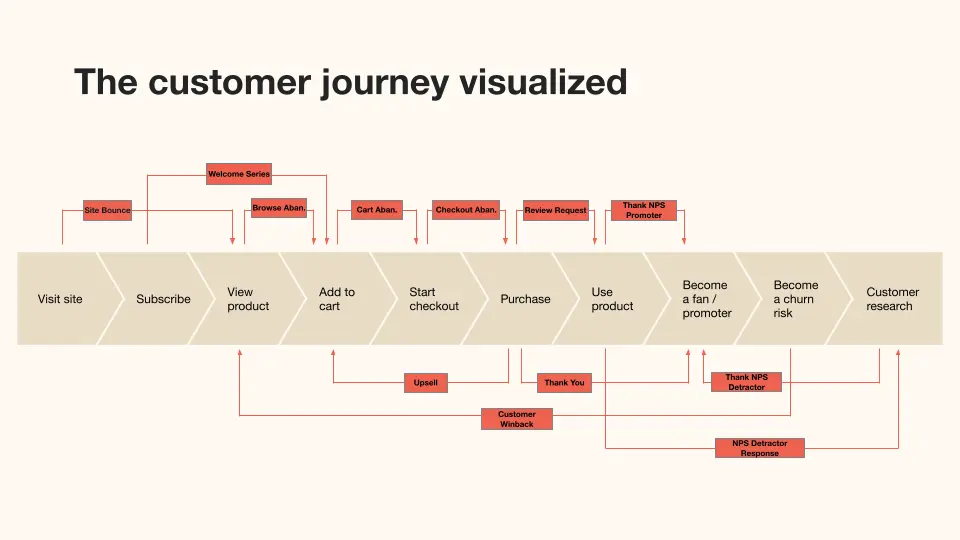
Campaigns remain useful for announcements and seasonal moments, but they are insufficient as a retention strategy. Lifecycle marketing reframes communication around timing and intent rather than calendar slots.
Instead of asking what to send this week, teams ask which moment the customer is currently in.
Key lifecycle moments often include:
- First-to-second purchase transition
- Early indicators of disengagement
- Post-purchase reassurance
- Loyalty reinforcement over time
Automation platforms such as Klaviyo allow brands to design these flows once and refine them continuously based on performance data.
Owned Channels as a Source of Leverage
The fundamental difference between paid and owned channels is leverage. Paid media demands constant investment to maintain visibility. Owned channels appreciate as relationships deepen.
As subscriber lists grow and customer data matures, each message becomes more efficient. Engagement rates improve. Revenue per send increases. Dependence on paid acquisition gradually decreases.
This does not eliminate the need for advertising. Instead, it reframes ads as an input into an owned ecosystem rather than the engine itself.
Why Brands Are Rebalancing Growth Strategies
The shift toward owned marketing is not philosophical—it is pragmatic. Brands operating in volatile markets increasingly recognize that resilience depends on retention infrastructure.
Those that invest in systems capable of storing memory, context, and trust can adapt more effectively to external shocks.
Email and SMS, powered by unified customer data, have become essential components of scalable growth rather than optional add-ons.
Conclusion: Ownership Enables Optionality
Modern ecommerce growth is no longer about finding the next acquisition channel. It is about building leverage through ownership.
Brands that control customer relationships gain flexibility. They can experiment, adjust, and scale without being fully exposed to platform volatility.
By transforming customer data into retention-driven revenue, platforms like Klaviyo help brands move beyond linear growth models.
In an environment where attention is rented but trust is earned, owned marketing offers something increasingly rare: durability.

