


Klaviyo Email Marketing for Ecommerce: The Retention System That Scales

Email marketing can be one of the most profitable channels in ecommerce—yet many stores still use it like a megaphone. They send promotions, hope for clicks, and repeat. The problem is not email. The problem is relevance.
Klaviyo is popular because it is built for ecommerce behavior. It treats customer actions (browse, cart, checkout, purchase, repeat purchase) as triggers, so your marketing happens when intent is high instead of when your calendar says “send.” If you want email to drive repeat purchases reliably, you need that event-driven foundation.
This guide explains what Klaviyo is, what makes it different from newsletter tools, which features matter most, and how to launch a small set of flows that create compounding retention over time.
What Klaviyo Is (and What It Is Not)
Klaviyo is a marketing automation platform designed for ecommerce. It combines customer data, segmentation, automation, and reporting so you can send email and SMS that reflect what shoppers actually do.
It is not only a “newsletter tool.” It is closer to a lifecycle system: a way to guide customers from first visit to first purchase, from first purchase to second purchase, and from repeat customer to long-term VIP—without building everything manually.
At a practical level, stores use Klaviyo to run flows that are always-on:
- welcome sequences that turn subscribers into buyers
- abandoned cart and checkout recovery that captures high-intent revenue
- post-purchase education that increases second purchases
- review requests that grow social proof
- win-back campaigns that reactivate customers before churn becomes permanent
Why Ecommerce Brands Choose Klaviyo
Most ecommerce marketing challenges are not “lack of content.” They are mis-timed messaging and generic targeting. Klaviyo helps solve both.
It is built around events
With event-based triggers, you can message customers when they show intent. That is fundamentally different from scheduling an email because “it’s Tuesday.”
Segmentation is simple to operationalize
Most stores know they should segment, but they do not have time to execute it. Klaviyo makes it easier to build segments based on:
- purchase frequency and order value
- browsing and category interest
- discount behavior (who only buys with a coupon)
- recency (how long since last purchase)
Automation reduces workload without reducing control
Flows do not remove strategy; they automate it. Once you set logic and content, the system runs consistently, and you refine it over time.
SMS is available when speed matters
Email is where you educate and build a narrative. SMS is where you deliver quick nudges. When used sparingly, the combo can lift conversion without annoying customers.
The Klaviyo Features Ecommerce Teams Actually Use
It is easy to get distracted by feature lists. In ecommerce, performance typically comes from a few core capabilities.
1) Forms that capture subscribers with intent
List growth is not about volume; it is about quality. Strong sign-up strategy usually includes:
- a specific value offer (guide, perks, early access), not only a discount
- minimal fields to reduce friction
- preference capture after sign-up (category interests, usage goals)
2) A flow builder that supports lifecycle marketing
The flow builder is the “engine room.” It lets you create automated sequences triggered by customer actions and timed for best response.
3) Behavioral segmentation
Behavioral segments often outperform demographic ones because they reflect real intent. Useful examples include:
- viewed product pages 3+ times in 7 days
- abandoned checkout within the last 24 hours
- purchased once but not again within 45 days
- VIP customers above a spend threshold
- customers who respond strongly to product launches
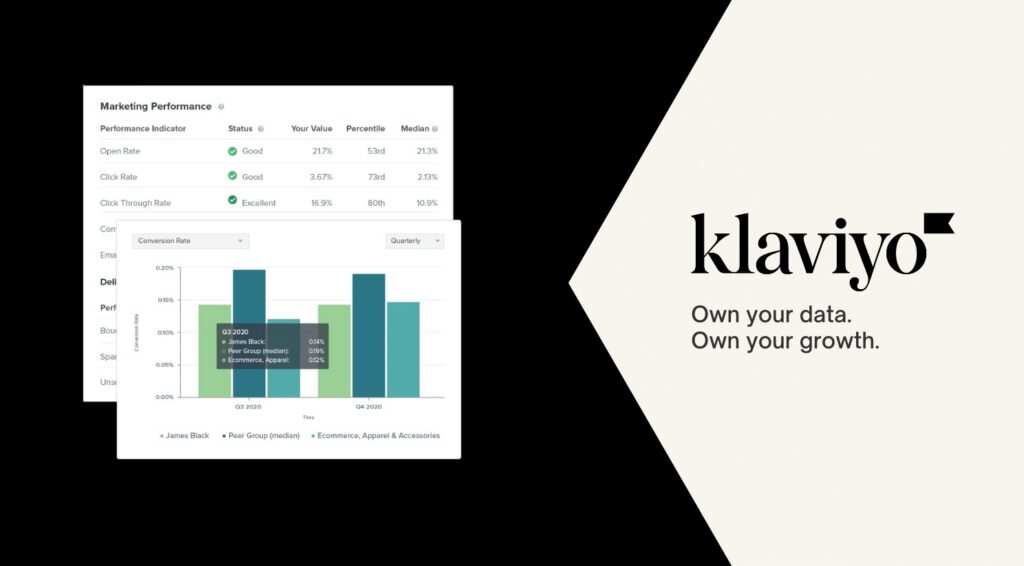
4) Reporting tied to revenue
The best reporting is not about vanity metrics. It answers revenue questions:
- which flows produce the most revenue per recipient?
- which segments convert best?
- what content patterns lead to repeat purchases?
The “Launch First” Flow Stack (Start Small, Win Faster)
If you try to build every automation at once, you will burn time and lose clarity. A better approach is to launch a small stack of flows that covers the entire customer journey.
Flow A: Welcome series
Goal: convert subscribers into first-time buyers while building trust.
- Email 1: what you sell and why it matters
- Email 2: best sellers or “start here” picks
- Email 3: social proof (reviews, UGC, outcomes)
- Email 4: a gentle nudge or time-bound perk (optional)
Flow B: Abandoned cart + checkout recovery
Goal: recover high-intent revenue by removing hesitation.
- Message 1: reminder + link back
- Message 2: benefits + FAQs/objections
- Message 3: proof or a light offer (only if needed)
Flow C: Post-purchase education
Goal: create the second purchase by helping customers get value quickly.
- setup/usage guide
- care instructions and best practices
- what to expect over time
- companion products that improve outcomes
Flow D: Review request
Goal: collect social proof and deepen buyer investment.
Flow E: Win-back
Goal: re-activate customers based on inactivity windows (30/60/90 days) with curated relevance, not desperation.
Many ecommerce teams adopt Klaviyo specifically because this “flow-first” approach is easier to implement and optimize over time.
Segmentation That Makes Campaigns Feel Personal
Once flows are running, campaigns become much more effective because you are not relying on them for basic lifecycle steps. Segmentation lets campaigns feel like curated updates instead of generic blasts.
- VIP: early access, premium bundles, founder notes
- First-time buyers: education + “next best product” recommendations
- Repeat buyers: launches, cross-sells, community content
- Inactive customers: curated best sellers in their category
- Category interest: content and offers aligned to what they browse
Start with 4–6 segments. Expand only when you can clearly explain why a new segment will change messaging.
How to Optimize Without Overcomplicating It
Optimization should be steady, not chaotic. A simple weekly routine can outperform random “big redesigns.”
Track flow performance first
- welcome: subscriber-to-buyer conversion
- abandonment: recovered revenue and clicks
- post-purchase: second purchase rate and timing
- win-back: reactivation rate by window
Then improve one thing at a time
- rewrite subject lines for clarity
- increase scannability with bullets and short sections
- adjust send times based on customer activity
- change one variable per test
Mistakes That Quietly Reduce ROI
- Sending too many promos: customers learn to tune you out.
- Neglecting post-purchase: retention begins after the first order.
- One segment for everyone: relevance disappears fast.
- Using discounts as the default lever: margin shrinks and brand trust weakens.
- Ignoring deliverability: poor list health reduces inbox placement.
FAQ
Is Klaviyo only for advanced marketers?
No. Many stores start with a few key flows and gradually add segmentation as they learn what customers respond to.
What should I build first in Klaviyo?
Welcome series, abandoned cart/check-out recovery, and post-purchase education. Those three cover the highest-leverage parts of the customer journey.
Do I need SMS to see results?
Not necessarily. Email alone can drive strong retention when flows and segmentation are solid. Add SMS later if you have a clear, high-intent use case.
How do I increase repeat purchases quickly?
Focus on post-purchase education and category-based recommendations. The second purchase milestone is the core retention lever for most brands.
Final Thoughts
Klaviyo becomes powerful when you treat email marketing as a lifecycle system: welcome, recover, educate, retain, and win back. Start with a small flow stack, keep segmentation simple, then improve performance through consistent iteration.
If you want ecommerce email and SMS that feels personal and timely instead of random, you can explore Klaviyo and build your retention engine from the highest-impact flows first.
Building retention revenue with Klaviyo becomes more predictable when you combine strong automation, behavior-driven segments, and reporting that ties every message back to real customer actions and repeat purchases over time.

