


LunaProxy Review For Web Data Projects

Proxy tools are easy to misunderstand because the buying decision often starts with a big IP pool number, but the real question is whether the proxy setup fits the work you actually need to run.
A market research team, SEO analyst, price monitoring workflow, or data collection project does not only need access. It needs stable sessions, suitable proxy types, clear pricing, location targeting, usage control, and a compliance-minded process.
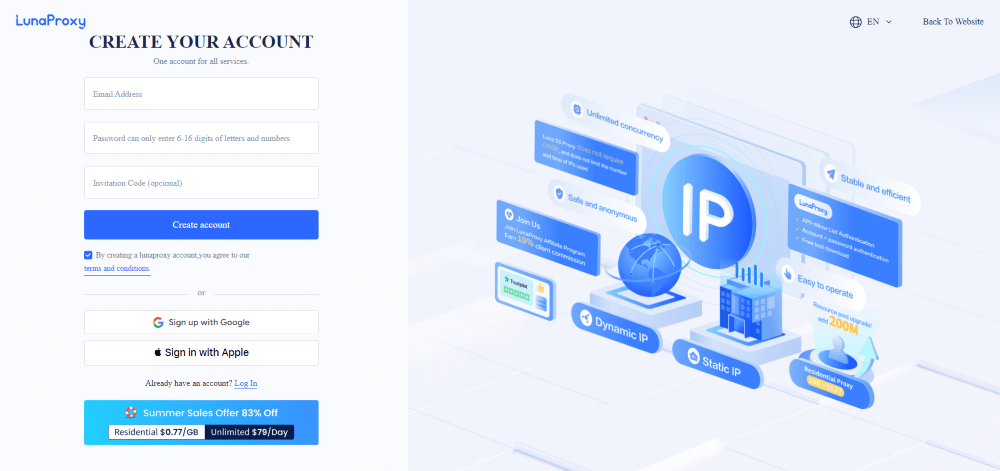
LunaProxy is a proxy provider built around residential, ISP, datacenter, rotating ISP, and scraping automation products. According to LunaProxy’s official product page, the platform offers residential proxies from 200M real IPs across 195+ locations, with pricing shown from $0.77 per GB for residential proxies.
What LunaProxy Is Built to Solve
LunaProxy is designed for teams and individuals that need proxy infrastructure for web data collection, market research, testing, SEO monitoring, ad verification, and location-based access checks. It is not just one proxy product; it offers several proxy types for different levels of speed, stability, rotation, and targeting.
LunaProxy documentation lists dynamic residential, unlimited residential, static residential, static datacenter, and long-term ISP proxy packages. That matters because the best proxy choice depends on whether the project needs rotation, stable identity, high throughput, or predictable cost.
The main value is proxy choice
Some projects need rotating residential proxies because target websites are sensitive to automated traffic patterns. Other workflows need static ISP proxies because account sessions, testing environments, or location checks require consistency.
This variety gives LunaProxy a practical advantage for users who do not want to manage multiple providers for every proxy type.
- Residential proxies can support data collection that needs real-user-style IP diversity.
- ISP proxies can help when longer sessions and stable connections matter.
- Datacenter proxies can be useful for faster, simpler, lower-cost workloads.
- Scraping APIs can reduce the operational burden of building every crawler component yourself.
The key is to choose the proxy type based on workload, not simply on the largest advertised network.
Where LunaProxy Fits Best
LunaProxy is most useful when a project needs structured access to public web data across locations. That can include price tracking, competitor research, SERP monitoring, localization checks, content availability testing, or business intelligence workflows.
Good use cases for business teams
The strongest business use cases are usually research-driven. For example, an eCommerce operator may want to see how product pages, pricing, or delivery options appear in different regions. An SEO team may need to check search visibility from multiple locations.
| Use case | Useful proxy type | Why it fits |
|---|---|---|
| Price monitoring | Rotating residential | Helps collect public pricing data across locations |
| SEO rank checks | Residential or ISP | Supports location-specific search visibility checks |
| Ad verification | Residential with geo-targeting | Helps review how ads appear in selected markets |
| Internal testing | Datacenter or ISP | Can provide predictable connections for controlled tests |
For these cases, LunaProxy is most attractive when the team values proxy variety, flexible setup options, and a lower entry price for residential traffic.
How LunaProxy Proxy Types Compare
Before buying any proxy plan, map the proxy type to the actual job. This step prevents a common mistake: paying for the wrong proxy category and then blaming the provider when the setup does not match the workflow.
Residential proxies
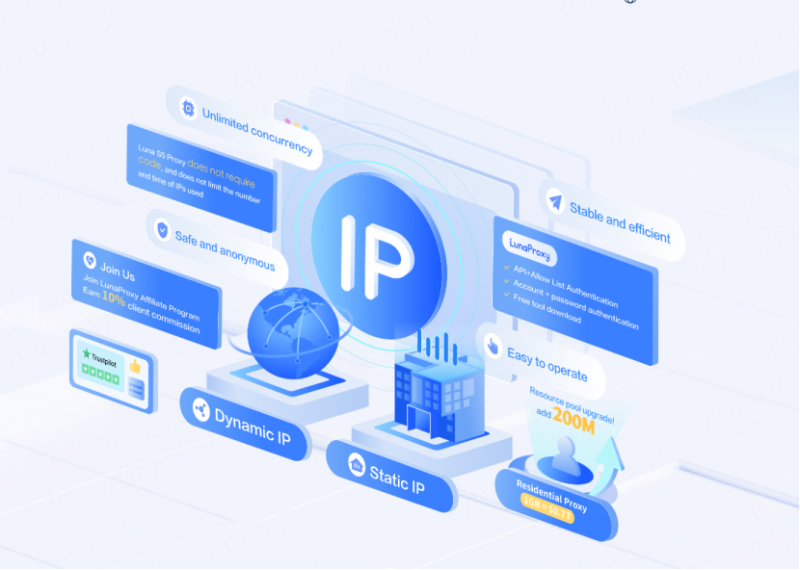
LunaProxy’s official site positions residential proxies around human-like scraping, broad location coverage, and reduced blocking risk. These are generally better for public data collection where the target site reacts differently to datacenter traffic.
Residential proxies are usually the first category teams consider for scraping and market research, but they still require careful rate limits, respectful crawling, and legal review.
ISP and datacenter proxies
ISP proxies are often useful when you need a more stable session but still want residential-style credibility. LunaProxy’s documentation describes static residential IPs as ISP-provided real residential IPs for permanent or non-rotating use cases.
Datacenter proxies are generally better when speed and cost matter more than residential identity. LunaProxy lists datacenter proxies as high-performance IPs with speed and stability at lower daily IP pricing.
Rotating ISP proxies
Rotating ISP proxies sit between stability and rotation. LunaProxy documentation says rotating ISP proxies support long sessions up to 12 hours, exclusive IP resources, unlimited connections, and unlimited threads.
That can be useful for projects that need session continuity while still changing IPs over time.
Strengths Worth Noticing
LunaProxy’s main strengths are coverage, product variety, and approachable pricing. The official product page lists multiple proxy products, scraping automation tools, API access, user-and-password authentication, whitelist authentication, and proxy management tools.
The product range is broad
Having residential, ISP, datacenter, rotating ISP, unlimited traffic proxy options, and scraping APIs in one place can simplify procurement for smaller teams. Instead of evaluating a new vendor for every workflow, users can test several proxy setups under one provider.
- Large stated IP pool across many locations.
- Multiple proxy categories for different workloads.
- Authentication options through whitelist or user and password.
- Proxy Manager and browser extension tooling for easier setup.
- Scraping API options for teams that want less crawler maintenance.
ProxyBros also notes LunaProxy’s broad IP pool, location coverage, tools, and add-ons in its LunaProxy review. Third-party reviews should not replace direct testing, but they can help identify what reviewers consistently notice.
Limitations and Risks to Consider
No proxy provider should be chosen only because it looks affordable or has a large network claim. Proxy quality depends on speed, stability, IP reputation, session control, support quality, dashboard clarity, documentation, and how the provider sources and manages its network.
Test before scaling
ProxyCorner’s 2025 LunaProxy review highlights strong pricing and coverage but also raises caution around privacy considerations and inconsistent customer support. ProxyBros gives LunaProxy positive scores overall, but its own review structure still separates user feedback, stability, price, support, and functionality.
That is a useful reminder: test the exact plan and target workflow before committing budget. A proxy setup that performs well for one website, geography, or data workflow may behave differently elsewhere.
- Run a small pilot before buying a large traffic package.
- Track success rate, response time, blocks, retries, and error patterns.
- Check documentation for authentication, IP duration, and session behavior.
- Review support responsiveness before relying on the tool for production work.
Also avoid using proxies for account abuse, spam, credential attacks, fraud, or bypassing rules that you are not allowed to bypass. Legitimate proxy use should stay aligned with website terms, privacy rules, and applicable law.
A Practical LunaProxy Setup Workflow
The best LunaProxy setup starts with a clear task definition. Do not begin by buying the cheapest plan. Begin by defining what data you need, how often you need it, which locations matter, and what level of session stability is required.

Use this workflow before launch
- Define the target use case, such as price monitoring, SEO checks, ad verification, or public web data collection.
- Choose the proxy type based on rotation, location targeting, session duration, and expected traffic volume.
- Set authentication through whitelist or user-and-password access.
- Test on a small sample of URLs before scaling traffic.
- Measure block rate, success rate, speed, retry volume, and total cost per successful request.
- Document rules for compliant, rate-limited, and respectful collection.
This workflow keeps LunaProxy in the right role. It provides infrastructure, but the team still needs good targeting, rate controls, data quality checks, and compliance review.
Who Should Consider LunaProxy
LunaProxy is a reasonable option for users who need flexible proxy infrastructure without starting at enterprise-level pricing. It is especially relevant for teams that want to test several proxy types across research, scraping, SEO, and market monitoring workflows.
Best-fit users
The best-fit users are data teams, SEO operators, market researchers, ad verification workflows, web scraping developers, and eCommerce teams that need region-aware public web data.
Before: A team runs scraping tasks from a limited IP setup, sees inconsistent access, and cannot easily compare results across regions.
After: The team tests residential, ISP, or datacenter proxies by use case, tracks performance, and chooses a setup based on measured success rates.
Less ideal users
LunaProxy may be less ideal for teams that need strict enterprise compliance documentation, dedicated account management, or a highly proven provider for mission-critical data pipelines from day one.
It may also be the wrong fit for users who want proxies for abusive automation. A proxy provider should support legitimate access and testing, not harmful or deceptive activity.
A Smart Buying Checklist
Use a checklist before choosing a LunaProxy plan. Proxy buying becomes much easier when you compare the plan against measurable project requirements.
Check these details first
- Which proxy type fits the task: residential, ISP, rotating ISP, datacenter, or scraping API?
- Which countries, states, cities, or ISP-level targeting options are needed?
- How long should sessions last for the workflow to work correctly?
- What is the expected traffic volume and cost per successful result?
- How will retries, blocks, and failed requests be measured?
- Does the project comply with website terms, privacy rules, and legal requirements?
That final question is not optional. Proxy infrastructure should make legitimate research more reliable, not hide unsafe or unauthorized behavior.
Final Thoughts
LunaProxy is worth considering if you need a flexible proxy provider for public web data projects, SEO monitoring, ad verification, market research, or location-based testing. Its broad proxy range and low entry pricing make it especially interesting for users who want to test before committing to a larger proxy stack.
The best approach is to start small. Test the proxy type that matches your workflow, measure real success rates, check support quality, and only scale once the results justify the spend.
Start testing LunaProxy for your web data workflow if you want residential, ISP, datacenter, and scraping automation options in one proxy platform.
FAQ
What is LunaProxy best used for?
LunaProxy is best suited for legitimate public web data collection, SEO checks, ad verification, market research, location testing, and proxy-supported automation workflows.
Does LunaProxy offer different proxy types?
Yes. LunaProxy documentation lists dynamic residential, unlimited residential, static residential, datacenter, long-term ISP, and rotating ISP proxy options.
Should I choose residential or datacenter proxies?
Choose residential proxies for location-sensitive or block-prone public data tasks. Choose datacenter proxies when speed, simplicity, and lower cost are more important.
Is LunaProxy suitable for large-scale scraping?
It can be tested for large-scale workflows, but start with a pilot. Measure success rate, block rate, speed, support quality, and cost before scaling.
We only recommend tools we've tested and trust. This post may include affiliate links, meaning we may earn a commission if you choose to purchase - at no extra cost to you.


