


Selling Digital Products on Shopify: What Works (and What Doesn’t)

Digital products are booming. Courses, templates, ebooks, design assets, and licenses have become a real business model for creators, educators, and niche experts—not just a side hustle. Yet a common belief still shows up everywhere: “Shopify is only for physical products.”
That’s not quite true. Shopify is not just a “store for T-shirts.” It’s business infrastructure: checkout, payments, tax handling, customer management, and scalable operations. For digital products, Shopify can be surprisingly strong—if you understand one key principle: you can’t sell digital products the same way you sell physical products.
Physical products often sell through visuals and impulse. Digital products sell through trust, outcomes, and proof. In this guide, we’ll break down what works, what doesn’t, and how to build a digital product business on Shopify without falling into the common traps.

Why Shopify Works for Digital Products
The best way to think about Shopify is not “a shop.” It’s a commerce engine. Digital products need the same fundamentals as physical products—reliable checkout, global payments, customer records, and operational stability—without the complexity of inventory and shipping.
Shopify is business infrastructure, not a “physical store builder”
When you sell digital products, the core operational jobs are still there:
- collecting payments reliably
- handling different currencies and international buyers
- generating invoices/receipts and tracking customers
- managing taxes in a structured way
- supporting refunds and customer communication
This is where Shopify is strong. It’s built to process purchases at scale—so when you get traffic (from content, email, or social), your system doesn’t collapse.
Stable checkout and payment flexibility
Digital products convert when checkout feels safe. A clean, familiar checkout reduces friction and increases confidence—especially for first-time buyers. Payment flexibility matters too: international buyers often abandon if they can’t pay in a comfortable method.
Ideal for solo creators, educators, and niche experts
Shopify works best for creators who want to build a real business around their knowledge. It’s especially suitable if you:
- own an audience (newsletter, social following, community)
- teach a specific skill or solve a clear problem
- want control of your brand and customer relationship
In other words: Shopify handles selling and operations so you can focus on content and delivery.
Digital Products That Sell Well on Shopify
Not every digital product sells well. Many creators fail because they sell files instead of outcomes, or they create products that are too broad to feel valuable. The digital products that perform best on Shopify usually share one trait: they are specific and usable.
What works
1) Niche, self-paced courses
Courses sell when they promise a specific transformation and the buyer believes you can guide them there. Broad courses (“Learn Marketing”) are harder to convert unless you have massive brand trust. Niche courses (“Email Automations for DTC Skincare Brands”) sell faster because the audience is clear.
2) Templates that save time immediately
Templates work because they deliver instant utility. Popular examples include:
- Notion systems (content calendars, client CRM, habit trackers)
- Figma/Canva assets (brand kits, ad creative packs)
- Shopify-related templates (product description frameworks, landing page copy blocks)
- AI prompt libraries (structured prompts for a specific workflow)
People don’t buy templates because they love files. They buy templates because it saves time, reduces mental load, and gives them a “starting structure.”
3) Ebooks that solve one clear problem
Ebooks can sell well—if they are not “inspirational” fluff. Ebooks convert when they have a clear, practical promise, such as:
- a step-by-step plan
- a tactical framework
- a playbook with examples
4) Licenses and digital assets
Licenses work best when the buyer understands usage rights and the assets are professional. Examples include design elements, fonts, presets, LUTs, sound packs, or stock-like assets that are curated for a specific style.
What doesn’t work
1) General, vague content
Digital products with unclear outcomes struggle on Shopify because there’s no marketplace discovery to “accidentally” sell them. If your audience doesn’t immediately see why it matters, they bounce.
2) Courses that are too broad
Broad courses require strong authority and a known brand. Without that, buyers compare you to free YouTube content—and your price feels unjustified.
3) “Inspiration” ebooks
Motivation sells in social content. But ebooks that promise inspiration without a practical plan often lead to refunds, poor reviews, and low repeat business.
4) Selling the file instead of the outcome
This is the biggest mistake: “Here’s a PDF.” The customer doesn’t want the PDF. They want the result the PDF helps create.
Pricing Digital Products: Where Most People Get It Wrong
Digital pricing is misunderstood. Many creators assume “digital should be cheap,” then wonder why buyers don’t trust them. Others overprice without proof and see no conversions. The right pricing strategy is about value alignment.

Digital pricing is not “supposed to be cheap”
A high-quality digital product often contains condensed experience. If your product saves someone weeks of trial and error, the value can be significant. Cheap pricing can actually reduce trust because it signals low effort or low confidence.
Underpricing can lower credibility
If your course is priced like a casual impulse buy, customers may assume it’s thin. Underpricing can also attract buyers who are less committed, leading to higher refund requests and lower satisfaction.
Overpricing without proof kills conversion
High prices require strong proof: testimonials, case studies, examples, and a clear explanation of what’s included. Without proof, even a good product looks risky.
A better way to price: outcome-based logic
Pricing should reflect:
- Outcome: what result the buyer gets
- Time saved: how much effort you remove
- Skill transferred: what capability the buyer gains
One advantage of Shopify is how easily you can test pricing and offers. You can adjust product pricing, run controlled promotions, and iterate without changing platforms.
Store Setup for Digital Products (What Actually Matters)
You don’t need a “beautiful store.” You need a store that makes the product feel obvious, credible, and safe to buy. Digital products convert when everything is clear.
Homepage: clarity beats aesthetics
Your homepage should answer three questions quickly:
- Who is this for?
- What problem does it solve?
- What outcome should I expect?
If a visitor can’t answer those in 10 seconds, they leave.
Product page: sell the before/after, not the file
A strong digital product page includes:
- Before/after framing: what life looks like with and without it
- Use cases: real scenarios where the product applies
- Preview/sample: screenshots, modules, table of contents, sample pages
- What’s included: files, updates, bonuses, access duration
- Support expectations: what buyers can ask and what they can’t
Checkout: minimal distraction and clear delivery
Digital buyers worry about two things at checkout: “Is this legit?” and “How do I get it?” Reduce friction by keeping checkout clean and being explicit about delivery timing:
- instant access vs email delivery
- download limits (if any)
- license terms (if relevant)
This is another reason creators choose Shopify: the purchase experience is stable, familiar, and easy for customers to trust.
What Works: Proven Strategies
Selling digital products is selling belief. Customers buy when they believe the product will work for them and that you are the right guide.
Free content → paid product
The most reliable strategy is to teach publicly, then sell privately. Your free content proves competence and attracts the right audience. Your paid product packages the process.
Build an email list before you launch
Email is the highest-leverage channel for digital products. Social traffic is volatile; email is owned. If you want consistent launches, build the list early with:
- lead magnets that match your product topic
- short educational sequences
- weekly value emails that build trust
One flagship product beats many small SKUs
Many creators launch five products and none sell well. A single flagship offer simplifies marketing: every piece of content points to one transformation. After the flagship sells consistently, then add complementary offers.
Case studies and testimonials
Proof reduces risk. Even a small set of strong testimonials can lift conversion dramatically—especially when they include context: who the buyer was, what they tried before, what changed after.
Founder-led marketing
Digital products convert best when the buyer trusts the creator. Founder-led content—your story, your process, your mistakes, your method—creates differentiation that competitors can’t copy.
What Doesn’t Work (Even If Everyone Tries It)
Some tactics look “modern” but fail in practice—especially if you don’t have trust built yet.
Cold ads to a product with no awareness
Ads can work, but digital products often require trust before purchase. Cold traffic tends to bounce unless you have strong proof, clear positioning, and a product that solves a painful problem.
Landing pages that are too long or overly technical
Long pages can convert when every section builds belief. But many creators write pages that are long without being convincing—packed with features, jargon, and unnecessary details. Clarity beats complexity.
Huge bundles of digital products
Big bundles create choice overload and reduce perceived value. Customers wonder: “If this is so good, why is everything included for cheap?” Bundles often sell worse than one focused product.
Marketplace mindset
If you sell on a marketplace, you often rely on marketplace discovery and low-friction impulse buys. On Shopify, you don’t have built-in discovery the same way. You must build demand through content and audience, not rely on being “found.”

Shopify vs Other Platforms for Digital Products
Shopify isn’t “best for everything,” but it’s excellent when you want ownership and scale.
Where Shopify is strongest
- Brand ownership: your storefront, your rules, your customer relationship
- Scale: stable operations when traffic spikes
- Payment flexibility: international selling and trusted checkout flows
Where other platforms can be stronger
Some platforms win on discovery—marketplace traffic and built-in browsing behavior. That can help beginners who don’t yet have an audience.
Shopify is a better fit when you want to build a brand, not just sell a file.
From Product to Business
The best digital products aren’t an endpoint. They’re a foundation. A digital product is often the first “paid trust” step in a larger business.
Upsells that feel natural
- Coaching: for buyers who want personalized guidance
- Community: for belonging and accountability
- Subscription: for ongoing templates, prompts, lessons, or updates
Long-term growth: personal brand + content engine
Digital businesses compound when content keeps attracting the right audience. Your store becomes the conversion point for a long-term content system.
Email-driven revenue
Over time, your email list becomes your primary distribution channel. It’s where you launch new offers, collect feedback, and build repeat buyers—without being dependent on algorithm changes.
Final Thoughts
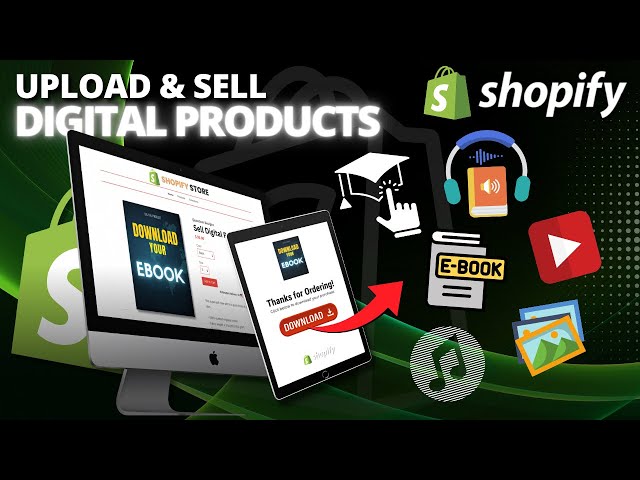
Selling digital products on Shopify works when you sell outcomes, build trust, and make delivery crystal clear. Shopify isn’t limited to physical goods—it’s a scalable commerce engine that can support a real digital product business as long as you don’t treat digital like physical.
Start selling digital products on Shopify with a clear offer, proof-driven product pages, and a trust-first marketing system—then grow through strong SEO, email automation, social proof, and long-term expansion into coaching, community, and subscriptions that turn one-time buyers into a sustainable business.
