


TikTok Reposts for Brands: How to Repost, When to Use It, and How to Do It Well

When a customer posts an honest TikTok review of your product, it’s a marketing gift. It’s unscripted, credible, and often more persuasive than anything you could film in-house. The frustrating part is that the video lives on someone else’s page, which means your own followers may never see it unless they happen to stumble across it.
Some brands try to solve this by downloading the clip and uploading it again, but that can look like content theft and usually removes the “native” context that makes TikTok feel authentic. Other brands simply comment and hope the algorithm does the rest. TikTok’s repost feature gives you a cleaner option: you can amplify someone else’s public video to your followers while keeping the original creator credited.

What a TikTok Repost Actually Does
A TikTok repost is a platform-native way to recommend someone else’s public video to your followers. Instead of creating a new upload, you’re essentially telling TikTok, “Show this to the people who follow me.” The original post remains owned and displayed under the creator’s account, and the creator credit stays intact.
For brands, that matters because credibility is one of TikTok’s strongest currencies. Reposting keeps the social proof “clean.” Viewers can see that the video came from a real person, not from a brand trying to manufacture trust.
It also helps to clarify what reposting is not. A repost is not the same as reposting a downloaded video, and it is not the same as an “original post” on your page. It’s closer to curating a feed than building one from scratch, and when you treat it that way, reposting becomes strategic instead of sloppy.
Why Brands Repost: The Business Reasons (Not Just Convenience)
Reposts are easy, but the best reason to use them isn’t effort—it’s leverage. A repost lets you benefit from content you didn’t have to create while still gaining the trust effects of real-world testimonials and creator storytelling.
1) Consistency without creative burnout
TikTok rewards accounts that show up frequently. The problem is that brands don’t always have the capacity to film, edit, and publish original videos every day—especially during busy fulfillment periods, launches, or seasonal peaks. Reposts can fill calendar gaps so your account stays active without forcing your team to produce non-stop.
2) Social proof that feels natural
UGC works because it looks like real life. When customers post unboxings, routines, or “I didn’t expect this to work” reactions, viewers interpret it as unbiased information rather than marketing. Reposting is a fast way to bring that proof into your ecosystem.
Strong repost categories include:
- unboxings and first-use reactions
- before/after demonstrations and results stories
- product hacks, styling ideas, and creative use cases
- creator shoutouts and niche recommendations
- customer routines that make the product feel “normal” and trustworthy
3) Creator relationship building
When you repost a creator’s video, you’re giving them visibility while signaling that you value their work. For creators, that endorsement matters. For brands, it’s often the easiest step toward future collaborations, paid partnerships, affiliate arrangements, or whitelisting for ads.
4) Faster learning about what resonates
Reposts also generate useful signals. If reposted tutorials outperform brand-made demos, that suggests your audience wants education more than hype. If reposted comedic niche content wins, your audience might prefer relatability and humor. Those insights should influence your next original content batch.
Choosing Reposts That Strengthen Your Brand (Not Just Your Views)
Reposting is most effective when it aligns with your positioning. The biggest mistake brands make is reposting whatever is trending, even when the trend does not match the audience they want or the product they sell.
Before you repost, run a quick alignment check. The best reposts usually do at least one of the following:
- Build trust: the creator shows a believable experience and a clear outcome
- Teach something: the viewer learns how to use the product or why it matters
- Show the “why”: the problem is clear and the product solves it naturally
- Represent your customer: the creator looks like your ideal buyer, not an unrelated audience
If a repost doesn’t do any of these things, it might still get views, but it may not help your business. Random virality often brings followers who enjoy the content but never convert.
How to Repost on TikTok (Step-by-Step)
The repost action is straightforward, but brands should still follow a consistent workflow so reposting remains curated rather than chaotic.

Step 1: Pick a video with a clear purpose
Decide which purpose the repost serves. Common brand goals include showcasing reviews, reinforcing a product benefit, highlighting a new use case, or supporting a campaign narrative.
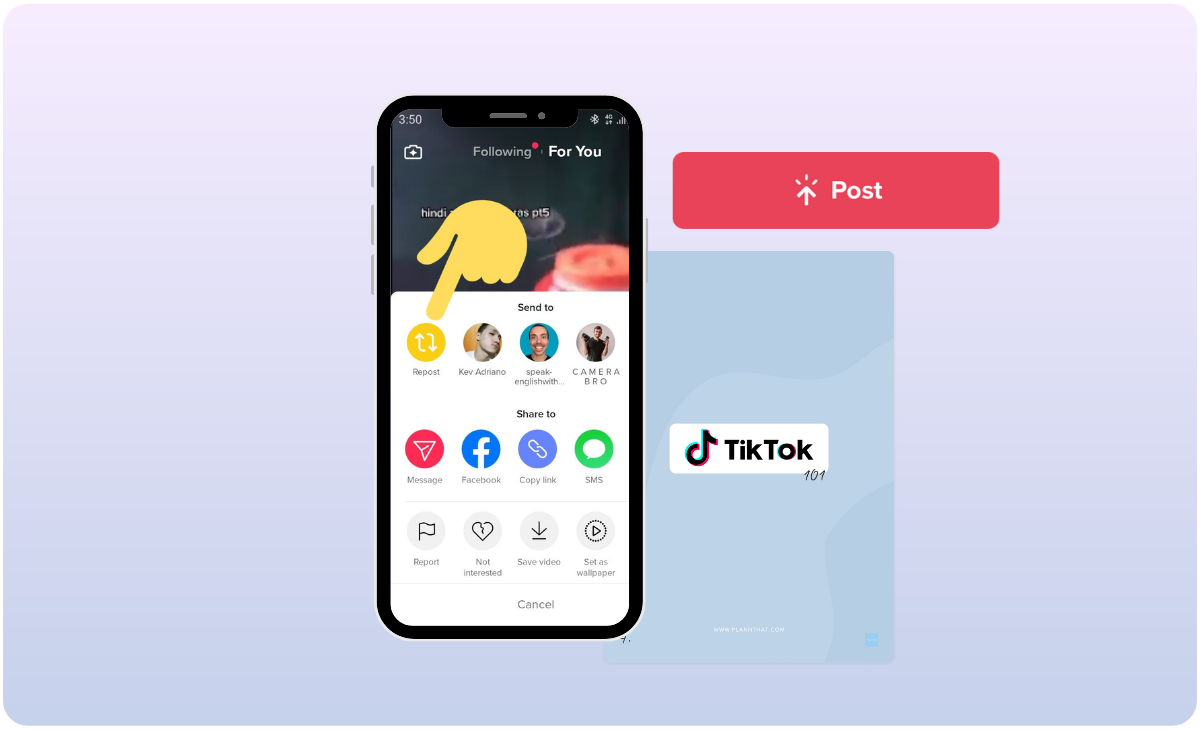
Step 2: Tap the Share arrow
Open the video and tap the Share icon (the arrow). TikTok will show a menu of options and quick actions.
Step 3: Select “Repost”
Tap Repost. TikTok will now distribute the video to your followers as content you recommended. The original creator stays credited, and you do not need to download or re-upload anything.
This is the cleanest method for amplification because it preserves attribution and reduces the risk of appearing like you “borrowed” content without context.
How to Undo a Repost (Remove It Cleanly)
Sometimes a repost no longer fits. The creator may add context later, a comment section might become toxic, or your brand may shift messaging. Removing reposts is normal, and it’s better to curate actively than to let a feed drift.
To undo a repost:
- open your profile
- locate the reposts section/tab (varies by app version)
- open the reposted video
- tap Share again and choose the undo/remove repost option
Undoing a repost does not delete the original video. It simply removes your endorsement and distribution.
Repost vs Duet vs Stitch: A Practical Brand Decision Guide
Reposting is not the only way to share someone else’s content. Duets and stitches are often better when you want to add commentary or show your face on screen. Choosing the right format depends on the outcome you want.
| Format | Use it when you want... | Brand advantage | Typical drawback |
|---|---|---|---|
| Repost | Amplification with attribution | Fast social proof, low effort, creator remains credited | Too many reposts can dilute brand voice |
| Duet | Presence and reaction | You add personality and community feel | Weak reactions feel forced or pointless |
| Stitch | Education or corrections | You borrow a clip and add an explanation | Requires tighter scripting to feel coherent |
A simple rule that works for most brands is this: repost for proof, duet for personality, stitch for authority. Use each format intentionally, and your content mix feels balanced rather than repetitive.
Best Practices: Reposting Without Looking Like a Content Recycler
Reposting should feel like thoughtful curation. If you repost too often, your account can look like it has no identity. If you repost random content, your niche becomes unclear. These practices help reposting work as a brand asset.
Anchor reposts to your positioning
Different brands should repost different content. A premium product benefits from quality-focused reviews and craftsmanship narratives. A value product benefits from comparison clips, “this surprised me” reactions, and practical use cases. Wellness products benefit from routine content and longer-term results stories.
Prioritize clarity over virality
A repost is most valuable when a first-time viewer understands the product’s value quickly. If a video is funny but unclear, it may not help conversion. A smaller video with clearer product demonstration can drive more qualified followers and better sales outcomes.
Mix reposts with originals and commentary formats
To keep identity strong, aim for a blend. One workable ratio for many brands looks like:
- Original videos: define your tone, explain benefits, show behind-the-scenes
- Reposts: amplify proof and community moments
- Duets/Stitches: add commentary and build authority
Use reposts as prompts for your next originals
If a repost performs well, create an original follow-up that answers what viewers will wonder next. This might include an FAQ-style answer video, a “how to use it” explainer, a myth-busting clip, or a behind-the-scenes demonstration that reinforces credibility.
Sales-Friendly Repost Patterns That Don’t Feel Pushy
Reposts influence sales best when they reduce skepticism instead of trying to “close” instantly. A few patterns repeatedly work well for ecommerce accounts.
Pattern 1: Weekly proof day
Choose one day per week as your UGC repost day. This creates a predictable rhythm and trains your audience to expect authentic customer perspective.
Pattern 2: Use-case library
Repost content showing different ways people use the product. When viewers see multiple use cases, perceived value rises and objections drop because the product feels more adaptable.
Pattern 3: Repost + original explainer pairing
Repost a creator’s video first, then publish an original video that clarifies benefits, answers common questions, or explains what makes the product different. This pairing keeps the creator credibility while restoring brand control of the narrative.
Pattern 4: Trend filtering
Only repost trends that match your audience identity and product category. Trend chasing for its own sake can bring in followers who are entertained but not aligned with your offer.
A Lightweight Repost System You Can Run Every Week
Brands often fail on TikTok not because they lack ideas, but because they lack a repeatable process. A simple system can keep reposting strategic and consistent.
Weekly posting template
- 2 originals: product demos, founder POV, behind-the-scenes, education
- 2 reposts: reviews, UGC, creator shoutouts
- 1 duet or stitch: reaction, Q&A, commentary
Save-and-select workflow
- Save potential reposts into a collection throughout the week
- Pick the best two by clarity and alignment, not by views alone
- Avoid reposting content that conflicts with your tone or audience
Quality filter before reposting
- Does this strengthen trust in our product?
- Does it fit the kind of customer we want to attract?
- Would this make sense as a “first impression” video for our brand?
With this structure, reposting becomes a controlled growth lever instead of a random habit.
Conclusion
TikTok reposts are one of the most efficient ways to amplify social proof, keep your feed active, and build creator relationships without overloading your content team. The feature is easy to use, but the strategy behind it matters. When reposts align with your brand POV, highlight clear outcomes, and sit alongside strong original content, they improve both engagement and trust.
If you want to grow with TikTok for Business and turn reposts into a repeatable marketing asset, combine curated reposts with conversion-focused originals, strong follow-ups that answer buyer questions, and disciplined creative testing so your content scales without burning out your team.
FAQ: Reposting on TikTok
Where do my reposts appear on TikTok?
Depending on your TikTok version, reposted videos may appear in a dedicated reposts tab/section on your profile and may also be distributed to followers through their feeds as content you recommended.
Why can’t I find the repost button?
The repost option can vary by region, app version, and creator settings. Try updating the app and testing different videos. Some creators may disable reposting on their content.
Is reposting the same as re-uploading someone else’s video?
No. Reposting shares the original video with the creator credited. Re-uploading typically removes attribution and can harm trust unless you have explicit permission and proper credit.
How often should a brand repost?
Many brands repost one to three times per week. The best frequency depends on your original content capacity, but maintaining a mix of originals and reposts usually protects your brand identity.
Can reposts help sales directly?
Reposts often influence sales indirectly by reducing skepticism and increasing trust. They work best when paired with original videos that clarify benefits, answer objections, and guide viewers toward the next step.