


Empathetic Customer Communication During Uncertainty with Klaviyo

Uncertainty changes how people read, react, and decide. When customers feel anxious or distracted by events beyond their control, brand messages carry extra weight, and even routine campaigns can land the wrong way.
Empathetic communication stays practical when it is built on relevance, timing, and respect. With Klaviyo, ecommerce teams can connect real customer behavior to smarter email and SMS decisions, so messaging feels helpful instead of noisy.
Why empathy matters more when customers feel uncertain
Uncertainty amplifies emotion. Customers become more selective about what they engage with and more sensitive to how brands speak to them.
Many shoppers may ignore dozens of promotions, yet remember the one brand that communicated calmly and clearly.
Empathetic communication usually shares a few clear traits.
- It prioritizes relevance over frequency.
- It answers questions before customers need to ask.
- It avoids turning anxiety into a sales hook.
- It stays consistent with the brand’s true voice.
When these principles are tied to real behavior data, empathy becomes repeatable instead of reactive.
Using Klaviyo, brands can base decisions on engagement, purchase history, and support signals rather than guesswork.
Choosing the right channel without overwhelming people
Channel choice matters more during uncertain times because each channel carries a different emotional expectation.
Email works well for context, reassurance, and detailed updates. SMS feels personal and interruptive, which raises the bar for relevance.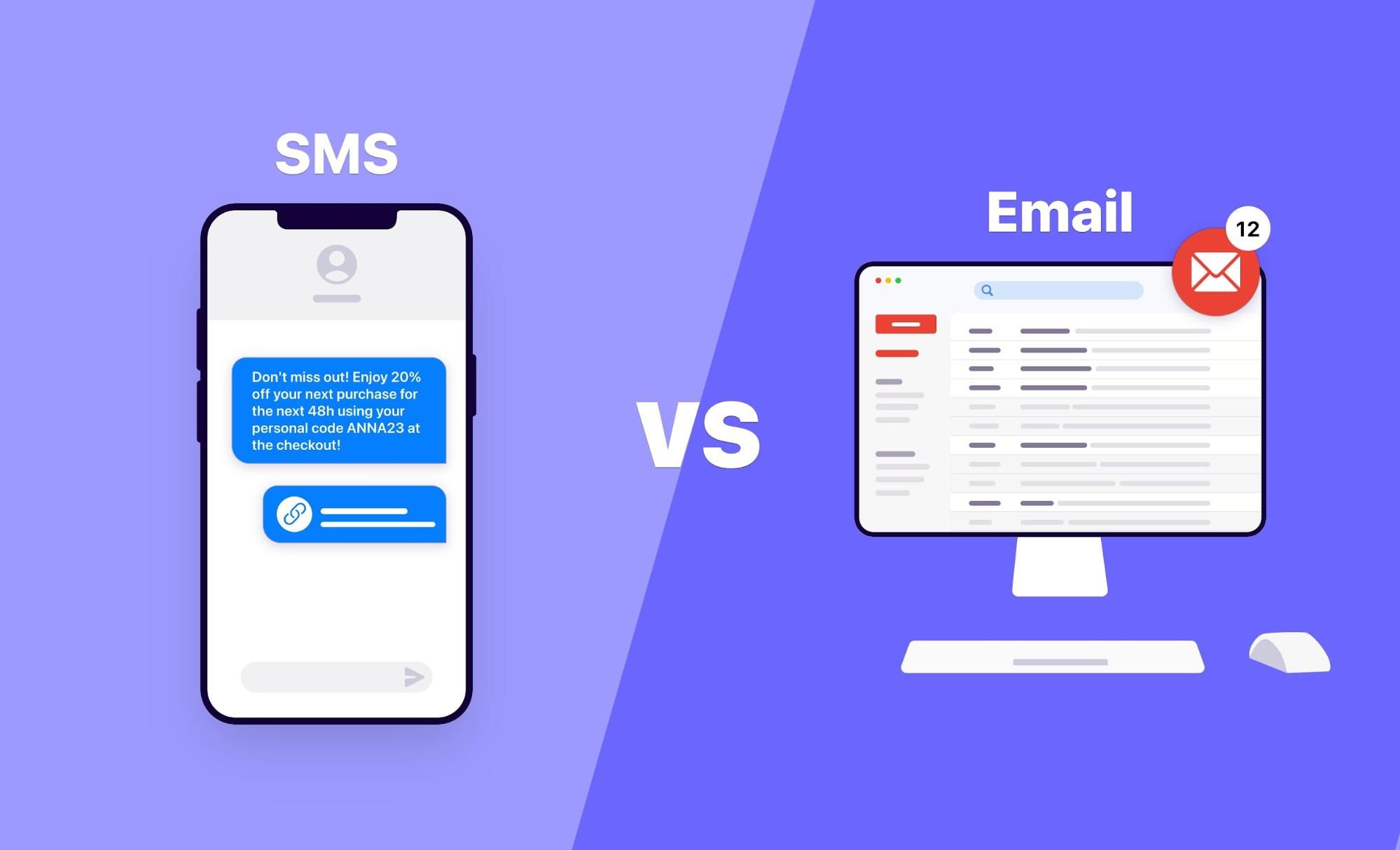
Social channels function publicly, where brand messages feel more like statements than conversations.
Empathetic brands respect these differences instead of repeating the same message everywhere.
Centralizing customer data makes this coordination easier. Platforms like Klaviyo help teams maintain consistent tone while adapting messages by channel.
What keeping customers informed should really mean
Transparency builds confidence, but only when information is genuinely useful.
During uncertain periods, customers usually want clarity on a small set of questions: order status, policy changes, delivery timelines, and support access.
Over-communication often happens when brands confuse visibility with value.
Segmentation helps prevent that.
- Recent buyers need fulfillment clarity.
- Customers with open tickets need reassurance.
- Inactive subscribers do not need operational updates.
- Loyal customers appreciate relationship-driven messages.
This precision reduces fatigue and protects trust.
Here’s a great example, which sent out an email marketing campaign outlining their cleaning processes during the pandemic.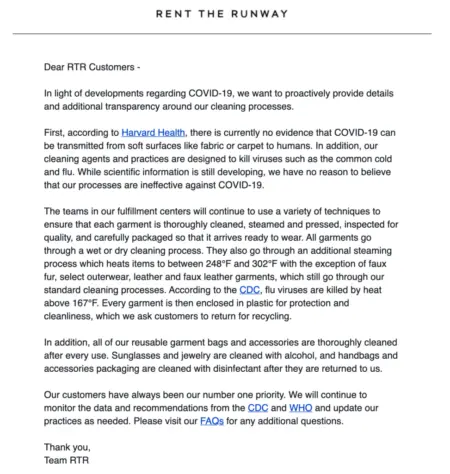
Behavior-based segmentation in Klaviyo helps teams deliver clarity without overwhelming inboxes.
Segmentation as an empathy tool, not just a revenue lever
Segmentation is often framed as a growth tactic, but during uncertainty it becomes a respect mechanism.
Different customers cope differently. Some stay engaged. Others pull back.
Sending one message to everyone forces customers to filter emotional noise themselves.
Behavior-based segments make empathy operational.
- Recently purchased customers value reassurance.
- High-intent browsers benefit from calm guidance.
- Repeat buyers value stability.
- Disengaged users prefer reduced frequency.
Dynamic segmentation allows communication to adjust as behavior changes.
Preparing readers for tactical changes
Empathy is not only about what you say, but how systems deliver it.
The next sections focus on adjusting automated workflows so messages feel human rather than mechanical.
Refreshing automated flows with a sensitive tone
Automation keeps ecommerce running, but it also creates risk when reality shifts and messaging does not.
Cart reminders or scarcity-driven copy can feel inappropriate during stressful periods.
Most brands do not need to pause automation entirely.
- Replace urgency with reassurance.
- Increase spacing between messages.
- Add clear support paths.
- Highlight flexibility and transparency.
Centralized lifecycle tools like Klaviyo allow teams to make these adjustments quickly.
Balancing revenue goals with compassion
Selling during uncertainty is not unethical by default.
Problems arise when messaging appears to exploit fear or urgency.
Brands often perform better when they emphasize value and reliability instead.
- Clear usefulness.
- Operational stability.
- Policy transparency.
- Authentic community alignment.
Trust built this way often outlasts short-term promotions.
Using content to support rather than distract
Not every message needs to drive a sale.
Helpful content can reduce uncertainty, answer questions, and calm decision-making.
Guides, updates, and reassurance often outperform aggressive campaigns in sensitive moments.
With Klaviyo, content can reach only the audiences who need it.
Listening as the foundation of empathy
Empathy is not something you declare once and move on. It evolves. What feels supportive today can feel repetitive next month. Customers’ attention and emotional bandwidth shift constantly, so brands benefit from feedback loops that help them adjust.
Engagement signals reveal when customers want less, not more.
When brands treat behavior data as a living signal, they respond faster. They stop guessing. They avoid spamming the wrong people. This is one reason customer-first teams lean into platforms like Klaviyo to connect behavior to messaging decisions without manual work every week.
Staying aligned with brand values
Empathy feels believable when it matches the brand customers already know. If a brand suddenly sounds overly corporate, customers sense distance. If a brand becomes performative, customers sense marketing. Consistency helps customers feel safe, especially in uncertain periods.
Consistency in tone, policy, and support matters more than polished language. Unified systems help teams communicate clearly and calmly. Many ecommerce brands rely on Klaviyo to keep that alignment intact.
FAQ
Why does empathetic communication matter in ecommerce?
It protects trust, reduces churn, and helps customers feel supported rather than pressured.
How can brands avoid over-communicating?
By using behavior-based segmentation instead of blanket campaigns.
Is promotion still appropriate during uncertainty?
Yes, when messaging emphasizes usefulness and clarity rather than urgency.
How does Klaviyo support empathetic communication?
Klaviyo connects customer behavior to email and SMS workflows, keeping messages relevant and timely.
Should brands pause automation entirely?
Often no. Adjusting tone and timing is usually more effective than stopping communication completely.

